
 EN
EN



How to Calculate the Order Quantity of Baby Play Yard for Wholesalers?
For wholesalers, finding the right order quantity for baby play yards is essential to managing supply and demand. Calculating order quantities accurately helps to avoid loss due to overstocking as well as stockouts, which subsequently optimizes capital turnover and increases profit margins. Here is a step-by-step guide to assist wholesalers in making rational choices.
Know What the Market Demand is
In order to calculate the order quantity, market demand must be understood first. Wholesalers will want to analyze historical sales data for the last 1-2 years, especially focusing on sales data for each month and each quarter and sales volume. Market demand is likely to change due to seasonality, such as demand for baby products increasing before the holiday season and before the back-to-school season. Along with analyzing historical data, remaining vigilant on demand trends in the industry is important. For example, safety regulations may change or styles may become popular, which can shift demand. Looking at competitors will also help estimate sales potential.
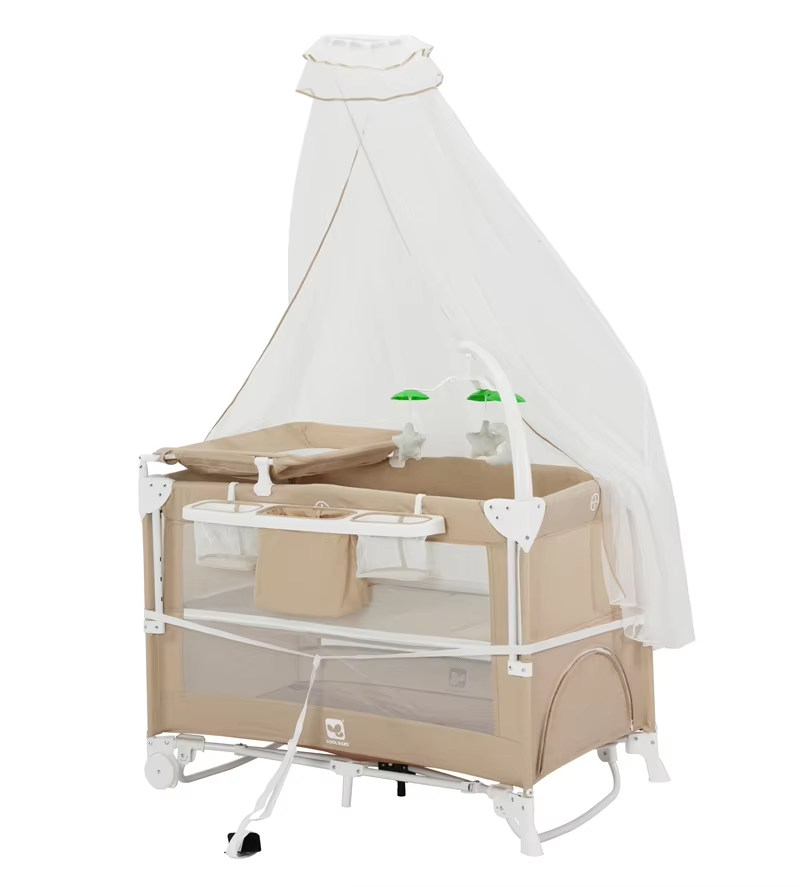
Analyzing Target Customer Groups
Understanding the differences in purchasing needs for different customer types is vital for wholesalers. Buyers for large baby product chains, local baby specialty stores, and online retailers might have different ordering patterns. Large chains typically place large, steady, and predictable orders, whereas local stores will likely place smaller, albeit more frequent orders and larger at more irregular intervals. Understanding the needs of customers in different regions is even more critical. Basic baby items, such as baby play yards, will likely have a higher demand in regions with higher birth rates. Conversely, in more affluent areas, customers will demand higher-end, multi-functional products. Recognizing the differences is vital for forecasting balanced orders in different product types.
Analyzing Inventory Holding Costs
No business can be profitable with poorly managed inventory. Costs such as warehousing, insurance, depreciation, and capital occupation and overstocking baby play yards, particularly with baby products as inventory, poses a unique risk as the product lifespan will be shortened when new safety standards come into place. Setting reasonable inventory turnover rates is a critical part of inventory risk management. For baby products, accepted industry standards allocate a turnover cycle of 3 to 6 months. Determine the maximum acceptable level of inventory based on holding costs to manage your order quantities and avoid trapping excessive capital as inventory.
Supply Chain Lead Times
Supply chain lead times mean the duration of order placement until the order is received. It spans the period of production, transportation, and clearance of borders/customs. The wholesalers should confirm this information before stockouts and under-supply occur. On the other hand, if a lead time provided is long, say like 2 or 3 months, then orders should be placed early to hot to a proper balance and increased buffer stock. Resting stock levels and orders can be placed strategically to the actual sales provided there are demands/suppliers are balanced and lead times are short.
Safety Stock Level
Safety stock is used to mitigate loss sales when demand spikes, and other supply chain issues create a stockout position. Seeing the maximum and average sales within a period are essential to the formula. The following will work: Safety Stock = (Maximum Daily Sales - Average Daily Sales) × Lead Time.This example explains it best. Average daily sales are 10, maximum daily sales is 15 and lead time (refill) is 30 days. The formula will calculate a safety stock value of 150. This allows an order to be reduced or sales demand.
Balancing Order Quantity and Supplier Terms
The conditions set by suppliers can determine how an order is placed. Certain suppliers provide quantity discounts. This means the farther away your order date is, the more expensive the unit price will be. Be wary of suppliers who pretend to give discounts. These offers can only be accepted if there is a close demand.Offer to negotiate more flexible delivery terms on your larger orders to suppliers. For instance, placing a big order but arranging staged deliveries or consignments according to the sales progress made. This time, wholesalers can claim discounts on unit prices without the worry of excess inventory pressure.
Review and Adjust Regularly
The first order on file and successive orders are not permanent. Assessing data on sales and available inventory must be on a regular basis for wholesalers. This can be done monthly or quarterly. In the event of a sales volume increase, the follow up order will need to be larger. If there is an increase in inventory, determine why (market, product, or other), and counter the plan by not purchasing for the next period.Every Apart from the first order, and the successive orders, are not permanent. Assessing data on sales and available inventory must be done on a regular basis for wholesalers. This can be done monthly or quarterly. In the event of an volume increase sales, the follow up order will be larger. If there is an increase in inventory, determine why (market, product, or other), and counter the plan by not purchasing for the next period. There is and will be order adjustments to be made. This has not changed.