
 EN
EN



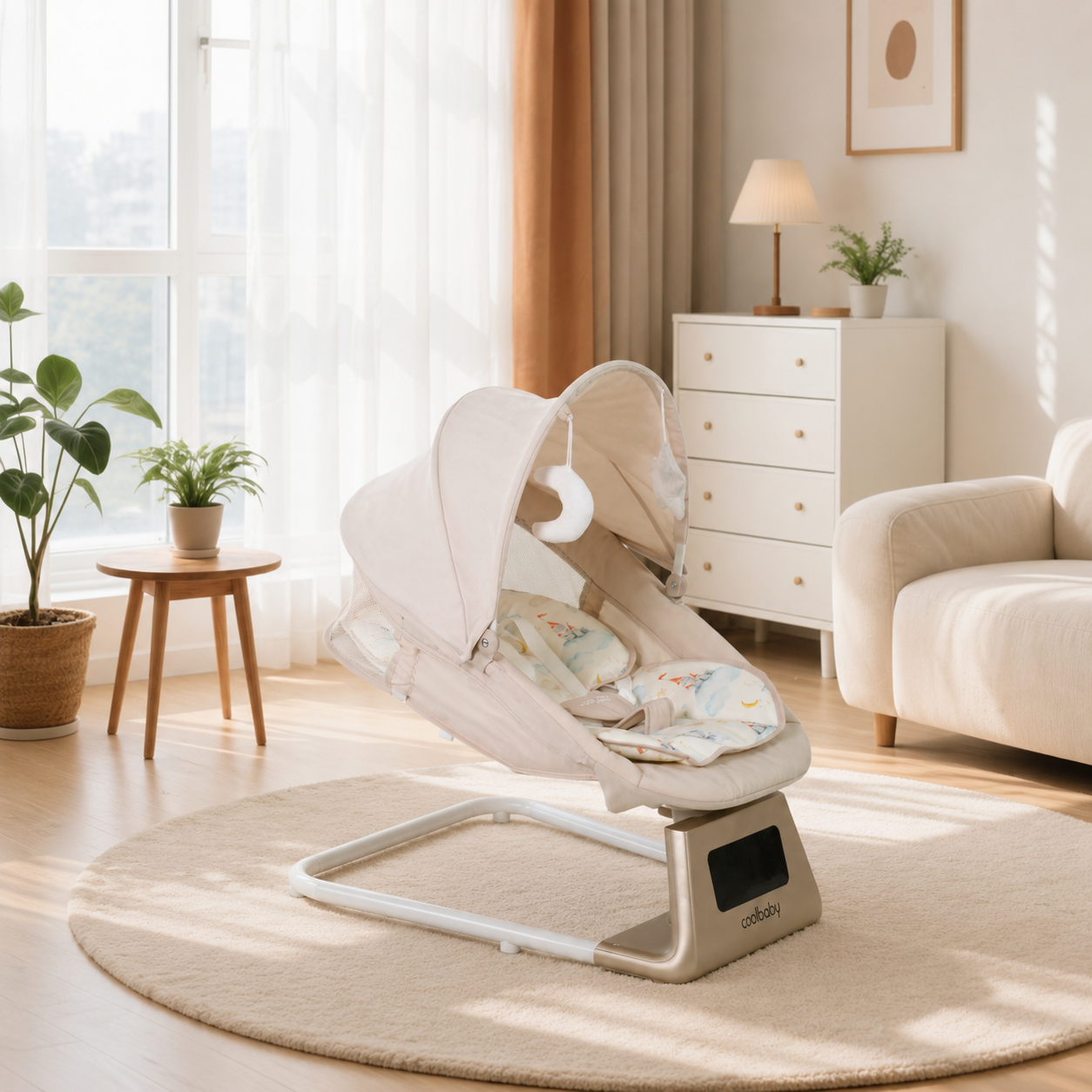
How to Select Baby Swing Suppliers That Meet Middle East Market Requirements
A reliable baby swing supplier for Middle East buyers should provide product safety documentation, market-specific compliance support, stable quality control, export-ready packaging, and responsive after-sales service.
For international wholesalers, retailers, importers, and distributors, sourcing baby swings for the Middle East is not only about price. The supplier must understand safety expectations, documentation requirements, climate conditions, packaging needs, and after-sales risks in regional markets.
A professional supplier can help buyers reduce compliance delays, product return risks, customer complaints, and supply chain uncertainty.
Why This Matters for Middle East Buyers
The Middle East baby product market has strong demand for safe, functional, and family-friendly nursery products. For B2B buyers, however, the real challenge is not simply finding a baby swing supplier. The challenge is finding a supplier that can support long-term resale, distribution, and brand reputation in local markets.
Baby swings are different from ordinary consumer products because they involve:
- Infant safety
- Product stability
- Electrical or mechanical performance
- Warning labels and user instructions
- After-sales support
- Market-specific compliance documents
In actual wholesale and retail operations, common problems may include:
- Missing test reports or incomplete compliance documents
- Packaging damage during long-distance shipping
- Weak frame stability or unstable swing movement
- Unclear user manuals for local customers
- Slow spare parts or warranty support
For importers and distributors, these issues can increase return costs and damage customer trust.
Factory insight:
A strong baby swing supplier should help buyers prevent problems before shipment, not only respond after problems happen.
Key Factors to Consider When Choosing a Baby Swing Supplier
1. Market-Specific Compliance Understanding
Middle East markets do not all follow one single standard. Buyers should confirm requirements according to the target country, sales channel, and product type.
For example, Saudi Arabia uses SASO conformity certification systems, including product, batch, and consignment-related certificates. SASO explains that conformity certificates confirm products comply with relevant standards before entering or circulating in the market.
In the UAE, MoIAT’s ECAS service applies to products subject to technical regulations and requires documents such as a valid trade license and test reports from accredited laboratories.
For GCC markets, the Gulf Conformity Mark indicates that products meet applicable GCC technical regulations. GSO also clarifies that the mark is not a quality mark, but a sign of conformity with essential health, safety, and environmental requirements for regulated product categories.
Buyers should ask suppliers whether they can support:
- Product test reports
- Certificate preparation
- Labeling and warning information
- User manual adaptation
- Country-specific compliance review
Key insight:
A supplier that understands regional compliance can reduce customs delays, documentation risks, and market-entry uncertainty.
2. Safety Testing and Product Standards
A professional baby swing supplier should understand the safety logic behind infant swing products.
Internationally, baby swing safety requirements often focus on:
- Structural integrity
- Stability testing
- Restraint systems
- Latching or locking mechanisms
- Sharp edges and small parts
- Labeling and warning instructions
The U.S. Consumer Product Safety Commission explains that infant and cradle swings are covered under 16 CFR part 1223, incorporating ASTM F2088, and lists requirements including structural integrity, stability testing, unintentional folding, restraint systems, and labeling.
For European-related references, EN 16232 covers safety requirements and test methods for infant swings intended for children up to 9 kg or unable to sit up unaided.
For Middle East buyers, even when local regulations vary by country, these international safety references are useful when evaluating supplier capability.
A qualified supplier should be able to explain:
- Which tests apply to the product
- Which reports can be provided
- Whether the baby swing has electric components
- Whether toy bars or accessories require additional review
- Whether labeling and instructions match the target market
3. Product Quality and Factory Testing Capability
Product quality directly affects the buyer’s brand reputation. For baby swings, quality issues often appear in daily use rather than during simple visual inspection.
Common quality risks include:
- Unstable base structure
- Weak swing mechanism
- Noisy motor operation
- Poor harness quality
- Battery or adapter instability
- Inconsistent speed control
- Loose screws or frame connection points
A professional supplier should have a complete inspection process covering:
- Incoming material inspection
- Frame stability testing
- Load testing
- Motor and swing function testing
- Packaging drop or transport simulation
- Final inspection before shipment
From a factory perspective, strong testing systems reduce the probability of after-sales complaints. They also help importers maintain more stable product reviews in local retail and online channels.
Buyer checklist:
Before placing a bulk order, ask the supplier whether they can provide sample testing records, production inspection procedures, and final quality control reports.
4. Localization for Middle East Markets
Localization is not only about language. For baby swings sold in the Middle East, buyers should consider user habits, climate conditions, packaging style, and retail presentation.
A supplier with Middle East experience should understand:
- Arabic user manuals or warning labels when required
- Heat and dry climate considerations for materials and packaging
- Family-oriented product presentation
- Practical functions such as remote control, music, timer, mosquito net, or adjustable swing speed
- Export packaging suitable for long-distance shipping
For retailers and distributors, localized packaging and user instructions can reduce customer confusion and improve product acceptance.
Factory insight:
Good localization improves not only market entry, but also after-sales efficiency. Clear instructions reduce misuse, complaints, and unnecessary returns.
5. Supply Chain Efficiency and Delivery Reliability
For Middle East importers and wholesalers, delivery reliability is a major purchasing factor. Seasonal sales cycles, promotional campaigns, and distributor commitments all depend on stable shipment planning.
Buyers should evaluate whether the supplier can offer:
- Stable production capacity
- Clear lead time confirmation
- Flexible MOQ for market testing
- Export-ready carton packaging
- Spare parts availability
- Fast communication during order execution
A supplier with organized production and warehouse systems is usually more capable of supporting both trial orders and long-term bulk cooperation.
For new market buyers, flexible MOQ is especially important because it allows them to test demand without excessive inventory pressure.
6. Structured After-Sales Support
After-sales service is critical for baby swings because the product may include mechanical movement, electronic control systems, music functions, adapters, remote controls, and spare parts.
A reliable supplier should clearly define:
- Warranty period
- Spare parts policy
- Response time
- Technical support process
- Issue tracking system
- Replacement or repair procedure
|
After-Sales Factor |
Professional Supplier |
Ordinary Supplier |
|
Warranty Policy |
Clear warranty terms and responsibility scope |
Unclear or inconsistent warranty |
|
Response Speed |
Dedicated response within 24–48 hours |
Slow or delayed communication |
|
Spare Parts Support |
Motor, adapter, remote, fabric, and frame parts can be supported |
Limited or unavailable spare parts |
|
Technical Guidance |
Provides manuals, videos, and troubleshooting support |
Basic or no technical guidance |
|
Issue Tracking |
Records problems and follows up by case |
No standardized follow-up process |
|
Export Service |
Understands cross-border buyer needs |
Limited international service experience |
|
Documentation |
Provides test reports, manuals, labels, and product files |
Documents are incomplete or inconsistent |
Key insight:
A structured after-sales system helps Middle East buyers reduce customer complaints and maintain stable local market reputation.
Common Mistakes Buyers Should Avoid
1. Choosing Suppliers Based Only on Low Price
Low price may look attractive at the quotation stage, but it can create hidden costs later.
Possible risks include:
- Weak product structure
- Poor motor durability
- Incomplete packaging protection
- Limited spare parts support
- No real compliance assistance
For baby products, the cheapest supplier is not always the lowest-risk supplier.
2. Ignoring Country-Specific Compliance Before Ordering
Some buyers only confirm product appearance and price, but fail to check import requirements in advance.
This may lead to:
- Customs clearance delays
- Missing test reports
- Labeling issues
- Retail platform rejection
- Extra cost for re-testing or re-labeling
Buyers should confirm target market requirements before mass production, especially for Saudi Arabia, UAE, and GCC distribution.
3. Not Checking Product Function Stability
Baby swings are functional products. A sample may look good, but buyers should also test:
- Swing speed stability
- Noise level
- Timer function
- Remote control response
- Harness strength
- Anti-slip and anti-tip performance
- Long-time operation reliability
Function testing is especially important for electric baby swings.
4. Overlooking Packaging for Long-Distance Shipping
Middle East shipments often involve long-distance sea freight, container handling, warehouse transfer, and final-mile distribution.
Weak packaging may cause:
- Carton deformation
- Scratches on metal or plastic parts
- Missing accessories
- Higher return rates
A professional supplier should design packaging with export logistics in mind.
How Manufacturers Can Support Middle East Buyers
From a factory perspective, reliable supplier support should begin before the order is confirmed.
Professional manufacturers can support buyers through:
- Product selection advice for target markets
- OEM/ODM customization
- Compliance document preparation
- Arabic label and manual support when needed
- Quality inspection before shipment
- Export packaging optimization
- Spare parts and after-sales support
- Product improvement based on buyer feedback
The goal is not only to deliver products, but to help buyers reduce operational risks throughout the full purchasing cycle.
FAQ for Middle East Baby Swing Buyers
Q1: What should Middle East buyers check before importing baby swings?
A1: Buyers should check safety test reports, target-country compliance requirements, product labeling, user manuals, packaging quality, spare parts policy, and warranty terms.
Q2: Are ASTM or EN standards useful for Middle East baby swing procurement?
A2: Yes. Although Middle East requirements vary by country, ASTM and EN standards are useful references for evaluating product safety and supplier capability. For example, ASTM F2088 is used in U.S. infant and cradle swing safety regulation, while EN 16232 covers infant swing safety requirements and test methods in Europe-related markets.
Q3: Why is localization important for baby swings in the Middle East?
A3: Localization helps reduce user confusion and improves product acceptance. It may include Arabic instructions, market-appropriate packaging, climate-considerate materials, and clear warning labels.
Q4: Should importers choose suppliers with low MOQ?
A4: Low MOQ can help new importers test the market. However, buyers should also check whether the supplier can maintain stable quality, provide spare parts, and support larger orders later.
Q5: What after-sales support should a baby swing supplier provide?
A5: A reliable supplier should provide warranty terms, spare parts support, technical guidance, troubleshooting documents, and a clear response process for quality or function-related issues.
Summary: How to Make the Right Supplier Decision
When selecting a baby swing supplier for the Middle East market, wholesalers, retailers, importers, and distributors should evaluate more than product appearance and price.
A reliable supplier should provide:
- Market-specific compliance support
- Safety testing and product documentation
- Stable product quality control
- Localization capability
- Export packaging experience
- Reliable delivery coordination
- Structured after-sales service
Choosing the right supplier helps buyers reduce import risks, improve customer satisfaction, and build long-term competitiveness in Middle East baby product markets.
About CoolBaby
Anhui Cool Baby Science & Technology Development Corporation, under the CoolBaby brand, is a professional baby product manufacturer focusing on products such as baby playpens, electric baby bassinets, electric baby cradles, baby bassinets, baby cribs, baby strollers, baby mosquito nets, and baby bouncers.
With more than 300 patents, participation in international exhibitions such as the Canton Fair, Shanghai exhibitions, Cologne exhibitions, and Hong Kong exhibitions, and a manufacturing base covering approximately 100,000 square meters, CoolBaby supports OEM/ODM cooperation for international wholesalers, retailers, importers, and brand buyers.
For buyers evaluating baby swing suppliers for the Middle East market, working with a manufacturer that combines product development, quality control, export experience, and after-sales support can help create a more stable and reliable long-term supply chain.