
 EN
EN


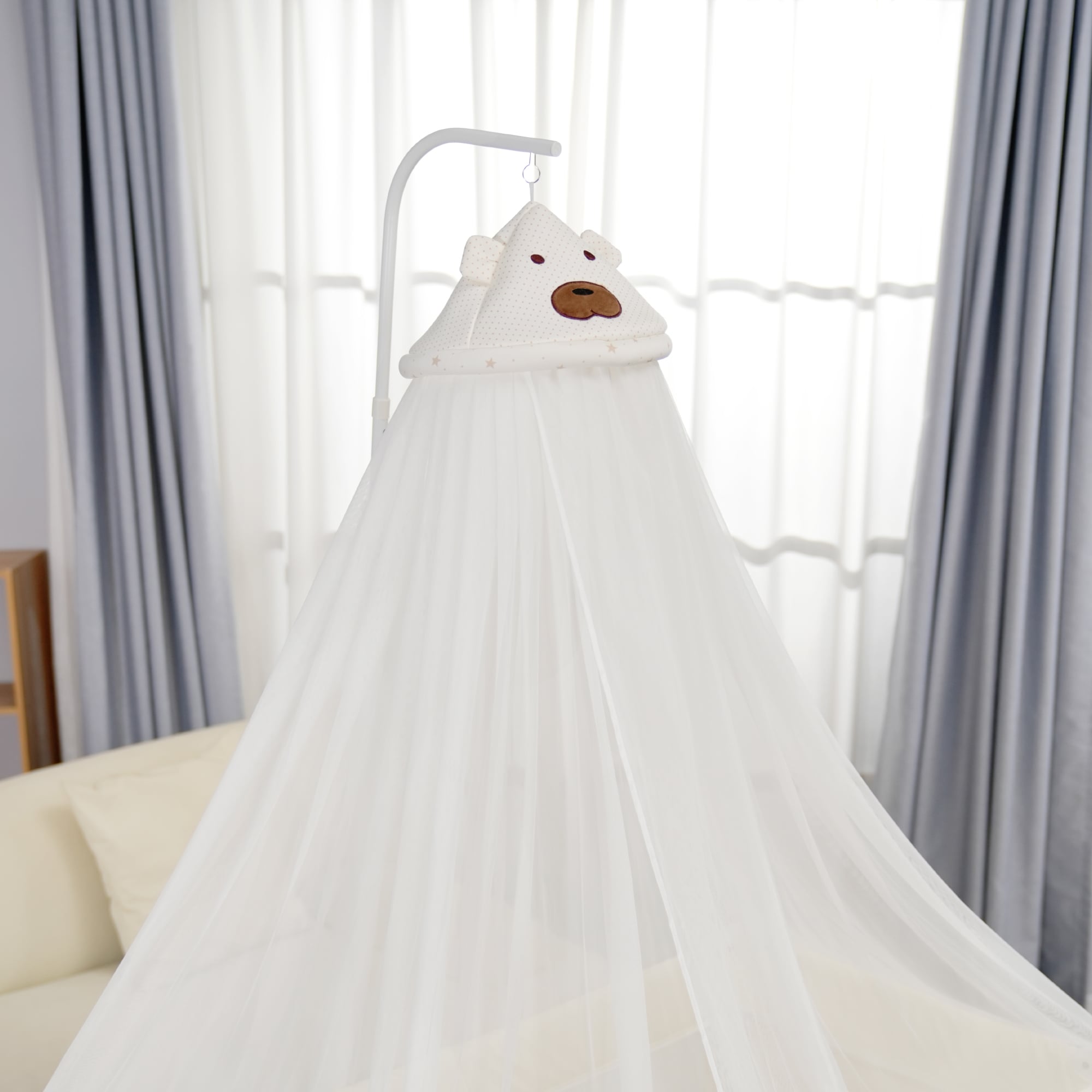
For wholesalers, retailers, and importers, checking baby mosquito net quality before bulk orders helps reduce safety risks, product returns, compliance uncertainty, and long-term damage to brand reputation.
Baby mosquito nets are often used together with baby cribs, baby playpens, baby bassinets, and other nursery products. Although they may look like simple accessories, their quality directly affects user safety, product presentation, customer satisfaction, and after-sales risk.
For B2B buyers, mosquito net quality is not only a product detail. It is part of the overall procurement risk control system.
Why This Matters for B2B Buyers
For international wholesalers, retailers, importers, and distributors, baby product quality is closely connected to market trust. Parents and end users have very low tolerance for product issues involving babies, especially when the product is used around sleeping or resting spaces.
Poor-quality mosquito nets may create problems such as:
- Weak fabric strength
- Loose stitching
- Poor mesh structure
- Easy tearing during installation
- Unstable connection with the crib or playpen
- Packaging damage during transportation
- Customer complaints and returns
In baby product procurement, small accessories can create large after-sales problems if they are not properly tested before shipment.
Key Factors to Consider When Checking Baby Mosquito Net Quality
1. Safety and Use-Environment Risk
Baby mosquito nets are used close to infants, so buyers should pay attention to potential risks related to airflow, fabric strength, attachment stability, and correct installation.
For infant sleep environments, the U.S. CPSC advises that babies should sleep in products that meet applicable federal requirements and that “bare is best” — nothing except a fitted sheet should be in a crib, bassinet, or play yard. (U.S. Consumer Product Safety Commission)
This does not mean all mosquito nets are automatically unsafe. However, it means B2B buyers should be more cautious when sourcing accessories used near baby sleep products.
A professional supplier should help buyers evaluate:
- Whether the mosquito net is securely attached
- Whether the mesh structure supports airflow
- Whether fabric edges and seams are finished properly
- Whether the net can be installed without loose hanging parts
- Whether warning labels and user instructions are clear
2. Material Safety and Laboratory Testing
Material safety is one of the most important factors for baby mosquito nets. Buyers should confirm whether the supplier can provide relevant material testing or product safety documentation according to the target market.
Common testing considerations may include:
- Fabric composition
- Color fastness
- Restricted substances
- Odor control
- Tear resistance
- Seam strength
A professional supplier should work with qualified laboratories or have internal testing procedures to support quality control. ISO/IEC 17025 helps laboratories demonstrate that they operate competently and generate valid results.
For China-based suppliers, CNAS accreditation can support the credibility of testing laboratories, and CNAS is listed among ILAC MRA signatory-related accreditation bodies. ILAC explains that its Mutual Recognition Arrangement supports confidence in accepted testing and calibration results from accredited conformity assessment bodies.
3. Mesh Density and Breathability
Mesh quality directly affects the user experience and product safety perception. If the mesh is too weak, it may tear easily. If the mesh structure is poorly designed, it may affect airflow, appearance, or durability.
B2B buyers should check:
- Mesh hole size consistency
- Fabric softness
- Airflow performance
- Tear resistance
- Edge finishing
- Whether the net keeps its shape after repeated installation
For baby product retailers, mesh quality also affects how the product looks in-store and online. A clean, soft, and well-shaped mosquito net can improve perceived product value.
4. Stitching, Seams, and Structural Stability
Many mosquito net quality issues do not appear in photos. They appear during installation, folding, packaging, and repeated customer use.
Buyers should inspect:
- Seam strength
- Elastic band quality
- Zipper or hook-and-loop areas if included
- Connection points with the crib or playpen
- Whether the net pulls too tightly or too loosely
- Whether loose threads may appear after handling
Poor stitching can lead to early damage, customer complaints, and replacement requests.
Key insight:
For bulk orders, seam quality is often more important than appearance alone.
5. Compatibility with Baby Cribs, Playpens, and Bassinets
Mosquito nets are often sold as part of a larger baby product system. Therefore, buyers should confirm compatibility before mass production.
Key questions include:
- Does the mosquito net fit the exact crib or playpen size?
- Is it compatible with high-pole mosquito net designs?
- Does it affect folding or storage?
- Does it interfere with toy bars, diaper changers, or bedside openings?
- Is installation easy for end users?
A mosquito net that fits poorly can create unnecessary returns even if the fabric itself is acceptable.
6. Packaging and Long-Distance Shipping Protection
For international B2B orders, mosquito nets may be compressed, folded, and shipped together with cribs, playpens, or bassinets. Poor packaging can cause deformation, wrinkles, missing accessories, or fabric damage.
Buyers should confirm:
- Folding method
- Individual packaging
- Moisture protection
- Accessory bag design
- Carton protection
- Whether installation instructions are included
For importers and distributors, packaging quality directly affects warehouse handling, retail presentation, and customer satisfaction.
Quality Inspection Checklist for B2B Orders
Before placing bulk orders, buyers should use a simple inspection framework.
|
Inspection Area |
What Buyers Should Check |
Why It Matters |
|
Material Safety |
Fabric composition, odor, restricted substances |
Reduces safety and compliance risks |
|
Mesh Quality |
Hole consistency, softness, airflow, durability |
Improves user experience and safety perception |
|
Seam Strength |
Stitching, edge finishing, elastic areas |
Prevents tearing and early product failure |
|
Installation Fit |
Compatibility with crib/playpen/bassinet structure |
Reduces misuse and return risk |
|
Packaging |
Folding method, moisture protection, accessory packing |
Prevents transport damage |
|
Documentation |
Test reports, manuals, warning labels |
Supports import and retail compliance |
|
After-Sales Policy |
Replacement terms, spare parts, response time |
Reduces long-term operational risk |
Common Mistakes Buyers Should Avoid
1. Treating Mosquito Nets as Low-Value Accessories
Many buyers focus only on the crib, bassinet, or playpen frame and ignore mosquito net quality. However, customers often notice accessories immediately during installation and use.
A low-quality mosquito net can make the entire product feel less reliable.
2. Checking Appearance Only
Photos cannot fully show mosquito net quality. Buyers should request samples and test:
- Stretching
- Repeated installation
- Folding and unfolding
- Seam pulling
- Compatibility with the full product
A mosquito net that looks good in photos may fail during actual use.
3. Ignoring Market-Specific Documentation
Different markets may have different expectations for labels, manuals, product warnings, and material testing. Buyers should not assume one document is suitable for all countries.
Professional importers should confirm documentation requirements before mass production.
4. Not Confirming After-Sales Responsibility
If mosquito nets tear, deform, or arrive with missing accessories, the buyer needs a clear solution.
Before ordering, confirm:
- Who is responsible for defective parts
- Whether replacements are available
- How fast the supplier responds
- Whether quality issues are tracked by batch
How Manufacturers Can Support B2B Buyers
From a factory perspective, mosquito net quality should be managed through the full production process, not only final inspection.
Professional baby product manufacturers can support buyers through:
- Material selection control
- Mesh and seam inspection
- Compatibility testing with cribs, playpens, and bassinets
- Packaging optimization for export shipping
- Clear installation instructions
- Batch quality tracking
- Spare parts and replacement support
- OEM/ODM customization for different market needs
The goal is not only to provide a mosquito net, but to ensure that the accessory supports the quality and market value of the full baby product.
FAQ for Baby Mosquito Net Wholesale Buyers
Q1: Why should B2B buyers check mosquito net quality before bulk orders?
A1: Because mosquito net quality affects safety perception, customer experience, return rates, and brand reputation. Poor fabric, weak seams, or poor compatibility can create after-sales problems after shipment.
Q2: What should buyers check in a baby mosquito net sample?
A2: Buyers should check material safety, mesh density, airflow, seam strength, installation fit, edge finishing, packaging, and user instructions.
Q3: Are baby mosquito nets subject to safety requirements?
A3: Requirements depend on the target country, product category, and how the mosquito net is sold or used. Buyers should confirm local regulations, product labeling, and applicable testing requirements before bulk orders.
Q4: Why is compatibility important for baby crib mosquito nets?
Q4: A mosquito net must fit the product structure properly. Poor compatibility can affect installation, appearance, folding, and customer use experience.
Q5: How can suppliers reduce mosquito net quality risks?
A5: Suppliers can reduce risk through material inspection, seam testing, sample approval, compatibility checks, export packaging control, and batch-level quality tracking.
Summary: Why Mosquito Net Quality Matters in B2B Procurement
For international wholesalers, retailers, importers, and distributors, baby mosquito net quality should not be treated as a minor detail.
A reliable mosquito net should have:
- Safe and suitable materials
- Consistent mesh structure
- Strong seams and finished edges
- Good compatibility with baby products
- Clear installation instructions
- Export-ready packaging
- Reliable after-sales support
By checking mosquito net quality before bulk orders, B2B buyers can reduce product returns, improve customer satisfaction, and protect long-term brand trust.
About CoolBaby
Anhui Cool Baby Science & Technology Development Corporation, under the CoolBaby brand, is a professional baby product manufacturer focusing on baby playpens, electric baby bassinets, electric baby cradles, baby bassinets, baby cribs, baby strollers, baby mosquito nets, baby bouncers, and related nursery products.
With more than 300 patents, participation in international exhibitions such as the Canton Fair, Shanghai exhibitions, Cologne exhibitions, and Hong Kong exhibitions, and a manufacturing base covering approximately 100,000 square meters, CoolBaby supports OEM/ODM cooperation for international wholesalers, retailers, importers, distributors, and brand buyers.
For buyers sourcing baby mosquito nets or complete baby product systems, working with a manufacturer that manages material quality, compatibility, packaging, and after-sales support can help create a more stable and reliable supply chain.