
 EN
EN


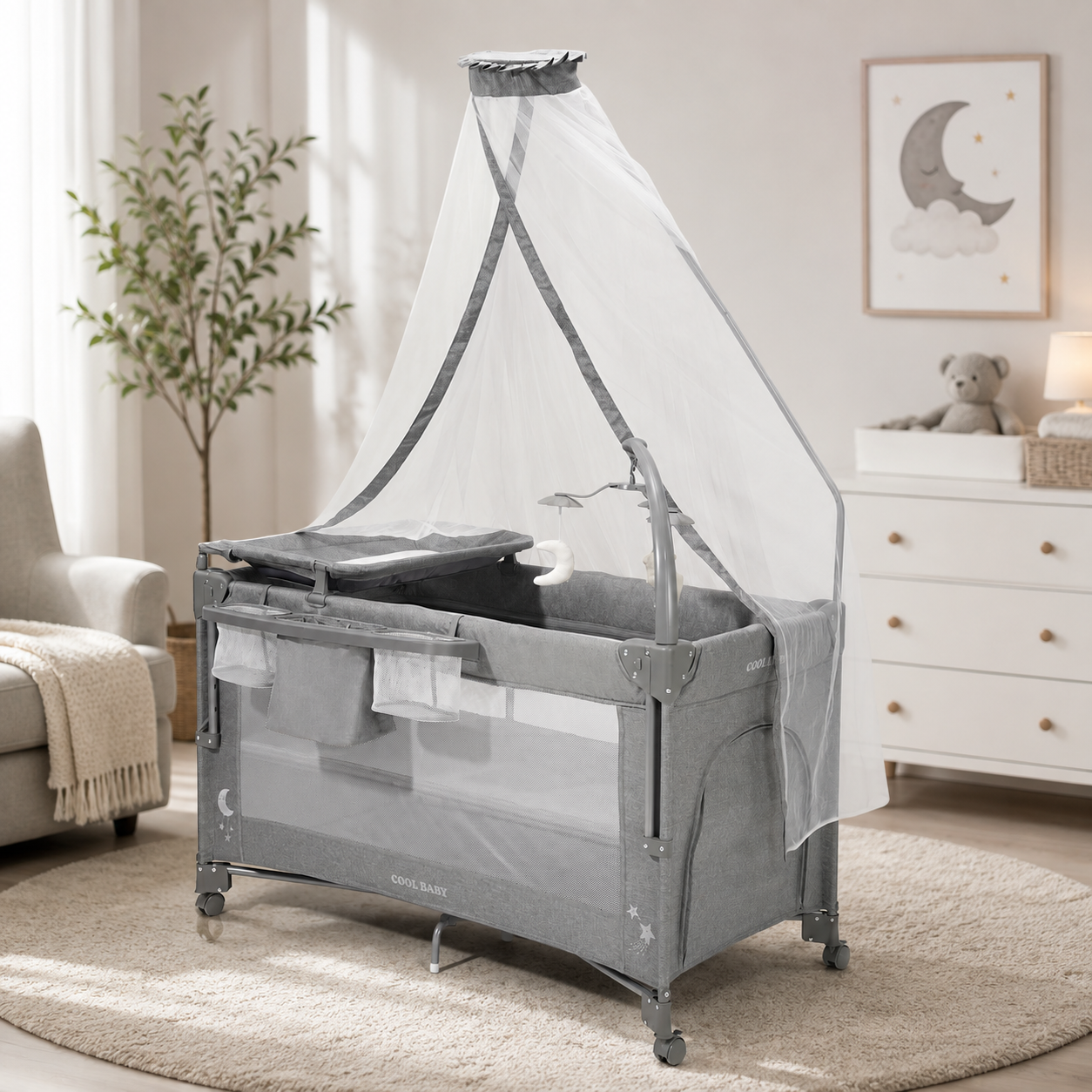
A reliable baby playpen manufacturer for B2B bulk orders should provide stable production control, sample-to-bulk consistency, clear quality inspection, export-ready packaging, realistic delivery schedules, and written after-sales responsibilities.
For international wholesalers, retailers, importers, distributors, and brand buyers, choosing a baby playpen manufacturer is not only about comparing prices. The more important question is whether the manufacturer can consistently deliver the approved product, support the buyer’s market needs, and respond effectively when quality or shipment problems occur.
This guide is designed for B2B buyers preparing to place bulk baby playpen orders, especially in markets such as the Middle East, Africa, Latin America, Southeast Asia, and other emerging baby product markets where stable quality, flexible cooperation, and practical after-sales support are essential.
Who This Guide Is For
This guide is written for:
- Baby product wholesalers
- Importers and distributors
- Retail chain buyers
- Online baby product sellers
- OEM/ODM brand buyers
- Procurement managers preparing bulk baby playpen orders
If you are comparing baby playpen manufacturers before placing a trial order, repeat order, or private-label order, this checklist can help you evaluate suppliers more clearly.
Why Manufacturer Evaluation Matters for B2B Buyers
Baby playpens are not simple household products. A complete baby playpen may include a metal frame, plastic joints, folding structure, mesh sides, mattress or floor pad, carry bag, warning labels, and accessories such as a bassinet, diaper changer, toy bar, mosquito net, rocker function, or storage basket.
If one part is unstable, missing, or inconsistent with the approved sample, it may affect the entire product experience.
Common problems in bulk baby playpen orders include:
- Bulk products looking different from approved samples
- Weak folding or locking mechanisms
- Mesh fabric tearing or loose stitching
- Missing accessories or incorrect packing
- Carton damage during long-distance shipping
- Delayed delivery during peak seasons
- Slow response when quality problems occur
- Unclear responsibility for replacement parts
For B2B buyers, these problems can lead to customer complaints, return costs, retail delays, and damage to local brand reputation.
Factory insight:
The purpose of evaluating a baby playpen manufacturer is not to find the supplier with the strongest sales claims. It is to find a manufacturer whose production, quality control, packaging, and after-sales process can be checked before the order is placed.
Key Factors to Consider When Evaluating a Baby Playpen Manufacturer
1. Factory Identity and Real Production Capability
Before placing a bulk order, buyers should confirm whether the supplier is a real manufacturer or mainly a trading company.
A professional manufacturer should be able to provide clear information about:
- Registered company name
- Factory location
- Main product categories
- Production lines
- Assembly process
- Warehouse capacity
- Quality control team
- Export experience
- OEM/ODM cooperation ability
A large showroom or product catalog does not always prove strong production control. What matters more is whether the supplier can manage materials, production schedules, quality inspection, packaging, and after-sales responsibility.
Buyers can ask practical questions such as:
- Which parts are produced in-house?
- Which parts are purchased from outside suppliers?
- How are outsourced components checked?
- Can the supplier trace products by order or production batch?
- Can the supplier support repeat orders with stable quality?
Using outside component suppliers is not necessarily a problem. The key is whether the manufacturer controls specifications, inspections, and changes before mass production.
2. Sample-to-Bulk Production Consistency
Many buyers approve a sample and assume bulk production will be exactly the same. In reality, quality differences often appear when a supplier changes materials, colors, components, or packaging without enough communication.
Before bulk production, buyers should confirm a final approved sample or “golden sample” covering:
- Frame structure
- Tube size and surface treatment
- Fabric and mesh material
- Plastic parts
- Mattress or floor pad
- Accessories included
- Product color
- Logo position
- Warning labels
- Instruction manual
- Carry bag
- Carton artwork
- Packing method
The supplier should not change important materials, parts, colors, accessories, or packing details without buyer approval.
Key insight:
A good-looking sample is only useful when the factory has a process to keep bulk production consistent with that sample.
3. Quality Control Process
A reliable baby playpen manufacturer should not rely only on final visual inspection. Quality should be checked throughout production.
For baby playpens, useful quality checks may include:
- Incoming material inspection
- Tube and frame inspection
- Plastic joint inspection
- Folding and locking function test
- Mesh and fabric inspection
- Seam and stitching inspection
- Mattress or floor pad fitting check
- Accessory installation check
- Product appearance inspection
- Carton contents check
- Final inspection before shipment
Buyers should ask whether the supplier can provide inspection records or photos during production. Even simple inspection documents can help buyers understand whether the factory has a real quality management process.
A statement such as “we check every product” is not enough. A professional supplier should be able to explain what they check, when they check it, and how they handle defects.
4. Product Structure and Daily Use Stability
For baby playpens, structure is one of the most important quality points. Even if the product looks attractive in photos, buyers should check whether it is stable, easy to fold, and suitable for repeated daily use.
Important structure points include:
- Whether the frame stands steadily after opening
- Whether the folding mechanism works smoothly
- Whether the locking system is secure
- Whether the mesh sides are tight and well fixed
- Whether the mattress or floor pad fits correctly
- Whether accessories are stable after installation
- Whether the product is easy for parents to assemble
- Whether the product can be folded and packed repeatedly
For importers and retailers, a product that is difficult to assemble or unstable during use may cause customer complaints even if the product appearance is good.
Factory insight:
For baby playpens, practical use testing is more important than photo appearance alone.
5. Realistic Production Capacity and Lead Time
Production capacity should be judged based on real order conditions, not only a general monthly output number.
Before confirming an order, buyers should ask:
- What is the current production schedule?
- Which production line will handle the order?
- Are the required materials already available?
- How long does packaging production take?
- Does customization affect lead time?
- When does the lead time officially start?
- Can the supplier support repeat orders?
- Can the supplier handle peak-season production?
For standard products, suppliers with ready stock or mature production systems may deliver faster. However, custom colors, logo printing, private-label packaging, or product changes usually require more time.
The purchase agreement should clearly state whether the lead time starts after deposit payment, sample approval, artwork confirmation, material confirmation, or another agreed milestone.
6. Export Packaging and Container Loading Efficiency
Packaging is very important in B2B baby product orders. A low product price may lose its advantage if the carton is too large, easy to damage, or inefficient for container loading.
Buyers should confirm:
- Final carton size
- Gross weight and net weight
- CBM per carton
- Number of products per carton
- Carton material and strength
- Internal protection method
- Accessory placement
- Shipping marks
- Barcode position if needed
- Instruction manual language
- Estimated container loading quantity
Carton size and CBM affect shipping cost directly. Buyers should calculate container quantity based on the final approved carton, not only early catalog information.
Key insight:
For bulk baby playpen orders, packaging is not only a protection issue. It is also a cost-control issue.
7. MOQ and Order Flexibility
MOQ is an important factor for B2B buyers, especially for new importers, distributors testing a market, or retailers expanding product categories.
Buyers should clarify:
- MOQ for standard products
- MOQ for custom colors
- MOQ for logo printing
- MOQ for private-label packaging
- MOQ for mixed colors
- MOQ for mixed models
- MOQ for repeat orders
Flexible MOQ can help buyers reduce inventory pressure when testing new markets. However, buyers should also check whether the supplier can maintain stable quality at both small and large order quantities.
A supplier that offers low MOQ but cannot support stable repeat orders may not be suitable for long-term cooperation.
8. OEM/ODM and Product Development Support
For brand buyers and distributors, OEM/ODM capability can help create product differentiation in local markets.
A manufacturer with stronger development support should be able to assist with:
- Product function discussion
- Color customization
- Logo placement
- Packaging design
- Instruction manual customization
- Accessory combination
- Sample development
- Cost analysis
- Product improvement suggestions
However, buyers should not treat all customizations as simple changes. Some product changes may affect structure, packing method, production cost, or delivery time.
Before starting an OEM/ODM project, buyers should confirm:
- What can be customized
- What cannot be changed easily
- Whether customization affects MOQ
- Whether customization affects lead time
- Whether extra sample cost is required
- Who owns the artwork, mold, or design files
Factory insight:
A responsible manufacturer should not accept every customization blindly. It should first evaluate whether the change is practical for production and stable for long-term use.
9. Written After-Sales Responsibility
After-sales terms should be discussed before the shipment, not after a problem happens.
Buyers should confirm:
- Warranty period
- Warranty scope
- What situations are excluded
- Spare parts availability
- Response time
- Required evidence for quality claims
- Responsibility for replacement parts
- Freight responsibility
- How repeated defects are handled
- How batch-level problems are reported and solved
For distributors and retail chains, spare parts support is especially important. A missing wheel, damaged connector, or broken accessory may cause the return of the whole product if no replacement solution is available.
A clear after-sales process helps both the buyer and the supplier reduce disputes and solve problems faster.
Baby Playpen Manufacturer Evaluation Scorecard
The following scorecard can help B2B buyers evaluate manufacturers before placing bulk orders. Buyers can adjust the weight according to their own market and business model.
|
Evaluation Area |
Suggested Weight |
Evidence to Request |
Common Warning Signs |
|
Factory Identity & Production Control |
15% |
Business information, factory photos/videos, production process details |
Supplier cannot clearly explain production control |
|
Quality Control |
20% |
QC process, inspection records, production photos, defect handling process |
Only gives verbal quality promises |
|
Sample-to-Bulk Consistency |
15% |
Golden sample, product specifications, approved packing details |
Supplier changes materials or accessories without approval |
|
Production Capacity |
15% |
Production schedule, material plan, estimated lead time |
Lead time is promised without clear production details |
|
Packaging & Logistics |
10% |
Final carton size, CBM, packing method, loading estimate |
Carton information changes repeatedly |
|
MOQ & Order Flexibility |
10% |
MOQ rules for standard and customized orders |
MOQ terms are unclear or change frequently |
|
OEM/ODM Support |
10% |
Customization process, sample plan, artwork confirmation |
Customization is accepted without practical evaluation |
|
After-Sales Support |
15% |
Written warranty, spare parts policy, claim process |
No clear responsibility after shipment |
A high score is meaningful only when it is supported by real evidence. Buyers should not rely only on brochures, product photos, or sales promises.
Common Mistakes B2B Buyers Should Avoid
1. Choosing a Manufacturer Based Only on Unit Price
The lowest quotation may exclude important costs such as stronger packaging, better materials, replacement parts, private-label packaging, inspection support, or after-sales service.
Buyers should compare total procurement risk, not only the factory unit price.
2. Approving Only Product Appearance
Color, printing, and style are important for retail sales, but they are not enough.
Buyers should also check:
- Frame stability
- Folding system
- Locking mechanism
- Mesh quality
- Seam strength
- Mattress or floor pad fit
- Accessories
- Packaging
- Instructions
A product that looks good in photos may still create problems during real use.
3. Ignoring Packaging Before Shipment
Some buyers focus heavily on product price but ignore carton size, packing strength, and internal protection.
Weak packaging may lead to:
- Carton deformation
- Scratched parts
- Missing accessories
- Higher return rates
- More customer complaints
For international buyers, packaging should be checked before bulk production is completed.
4. Assuming Factory Scale Always Means Stable Quality
Factory scale can support production capacity, but quality consistency depends on process control, inspection standards, trained workers, and corrective action.
A large factory without strict production management can still produce inconsistent orders.
5. Not Controlling Product Changes
If a supplier changes fabric, plastic parts, tube material, accessories, or carton design without approval, the final product may differ from the sample.
Buyers should require written approval before any major change.
6. Leaving After-Sales Terms Until After Shipment
Warranty, spare parts, replacement responsibility, and claim procedures should be confirmed before production begins.
Clear terms protect both the buyer and the supplier.
How Professional Manufacturers Can Support B2B Buyers
From a factory perspective, effective buyer support begins before the purchase order is confirmed.
A structured manufacturer can support international buyers through three stages.
Before Production
- Confirm the product model and configuration
- Review buyer requirements
- Prepare samples and specifications
- Confirm colors, accessories, labels, and packaging
- Discuss MOQ and lead time
- Confirm OEM/ODM details
- Agree on after-sales terms
During Production
- Control approved materials and components
- Conduct incoming, in-process, and final inspections
- Keep production and quality records
- Report important changes or delays
- Support pre-shipment inspection when agreed
After Shipment
- Provide installation or product-use guidance
- Supply agreed spare parts
- Respond to quality claims
- Track repeated problems
- Improve future production based on buyer feedback
The goal is not simply to respond to problems. It is to reduce preventable problems before products reach the buyer’s market.
Pre-Order Manufacturer Checklist
Before placing a bulk baby playpen order, buyers should confirm the following:
- The supplier’s factory identity and production capability have been checked.
- The final product model and configuration are confirmed.
- A sample or golden sample has been approved.
- Product materials, colors, accessories, and packaging are documented.
- Any product change requires buyer approval.
- The production schedule and lead-time starting point are clear.
- The QC process and inspection method are agreed.
- Final carton size, CBM, and loading quantity are checked.
- MOQ terms for standard and customized orders are confirmed.
- OEM/ODM requirements are clearly documented.
- Warranty and spare parts terms are written.
- Quality claim and after-sales procedures are defined.
FAQ for Wholesale Buyers
Q1: What should buyers check before placing a bulk baby playpen order?
A1: Buyers should check the supplier’s factory capability, sample consistency, quality control process, production schedule, packaging details, MOQ terms, OEM/ODM support, and after-sales responsibility.
Q2: How can buyers make sure bulk production matches the approved sample?
A2: Buyers should confirm a golden sample and written product specifications, including frame structure, fabric, mesh, accessories, color, logo, instruction manual, and packing method. Any change should require buyer approval.
Q3: Does a large factory always mean better quality?
A3: Not always. Factory scale may support production capacity, but stable quality depends on process control, inspection standards, trained workers, and clear responsibility for quality problems.
Q4: Why is packaging important for baby playpen bulk orders?
A4: Packaging affects product protection, shipping cost, warehouse handling, and customer satisfaction. Buyers should confirm carton size, CBM, internal protection, accessory placement, and loading quantity before shipment.
Q5: How should buyers evaluate MOQ?
A5: Buyers should confirm MOQ separately for standard products, custom colors, logo printing, private-label packaging, mixed colors, mixed models, and repeat orders. Flexible MOQ is useful for market testing, but long-term supply stability is also important.
Q6: What after-sales support should a baby playpen manufacturer provide?
A6: A reliable manufacturer should provide clear warranty terms, spare parts support, response time, claim evidence requirements, replacement responsibility, and a process for handling repeated quality problems.
Procurement Decision Summary
A capable baby playpen manufacturer should be selected through practical evidence rather than sales claims.
Before placing a bulk order, international wholesalers, retailers, importers, and distributors should evaluate:
- Real factory capability
- Stable quality control
- Sample-to-bulk consistency
- Realistic production capacity
- Export packaging and loading efficiency
- Flexible MOQ and order cooperation
- OEM/ODM support
- Written after-sales responsibility
No manufacturer can remove every procurement risk. However, suppliers with transparent production processes, documented quality control, realistic commercial terms, and structured after-sales support are generally better positioned to support long-term B2B cooperation.
About CoolBaby
Anhui Cool Baby Science & Technology Development Corporation, operating under the CoolBaby brand, is a professional baby product manufacturer focusing on baby playpens, electric baby bassinets, electric baby cradles, baby bassinets, baby cribs, baby strollers, baby mosquito nets, baby bouncers, and related nursery products.
With more than 300 patents, participation in international exhibitions such as the Canton Fair, Shanghai exhibitions, Cologne exhibitions, and Hong Kong exhibitions, and a manufacturing base covering approximately 100,000 square meters, CoolBaby supports OEM/ODM cooperation for international wholesalers, importers, distributors, retailers, and brand buyers.
For buyers evaluating baby playpen manufacturers for bulk orders, working with a factory that combines production control, quality inspection, export packaging, OEM/ODM support, and after-sales service can help create a more stable and reliable long-term supply chain.
For product catalogs, MOQ details, packaging information, or OEM/ODM discussion, buyers can contact the CoolBaby team based on their target market and order requirements.